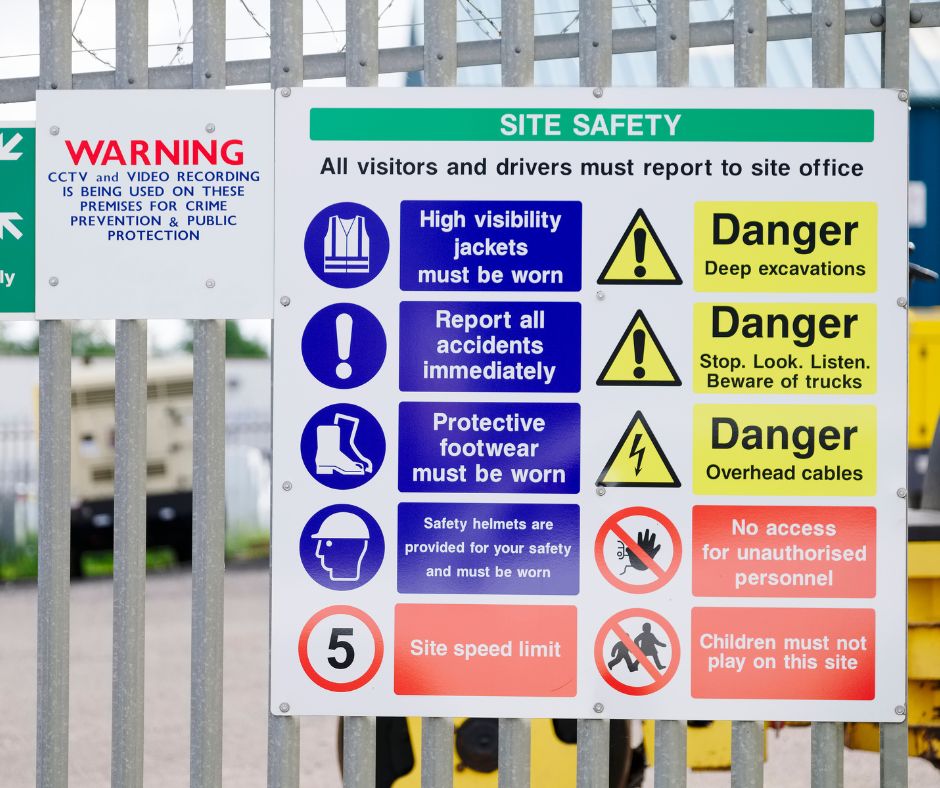
As an employer in the UK, it is your responsibility to provide a safe and healthy work environment for your employees. This includes ensuring that proper health and safety signage is in place throughout the workplace. Not only does this promote a safe working environment, but it also helps you comply with UK regulations.
The Health and Safety (Safety Signs and Signals) Regulations 1996 require employers to use safety signs where there is a significant risk to health and safety that cannot be controlled by other means. These regulations cover a wide range of signs, including fire safety signs, warning signs, prohibition signs, and mandatory signs.
One of the most important types of safety signs is fire safety signs. These signs are crucial in the event of a fire and can save lives. In the UK, it is mandatory to have fire safety signs in all workplaces. These signs include fire exit signs, fire equipment signs, and fire action signs. They must be clearly visible and easy to understand.
Another important aspect of health and safety signage is hazard warning signs. These signs are used to warn employees of potential hazards in the workplace. They can include signs for hazards such as chemicals, electricity, and machinery. It is important to ensure that these signs are placed in areas where the hazard is present and are easily visible.
Prohibition signs are used to prohibit certain actions or behaviours in the workplace. These signs can include no smoking signs, no entry signs, and no photography signs. It is important to clearly communicate these prohibitions to employees to avoid any accidents or safety hazards.
Mandatory signs, on the other hand, are used to indicate actions that must be taken by employees. These signs can include wearing personal protective equipment (PPE), washing hands, or using safety equipment. It is important to ensure that these signs are placed in areas where the action is required and are easily visible to employees.
In addition to complying with UK regulations, proper health and safety signage also helps to create a culture of safety in the workplace. When employees see that their employer takes safety seriously, they are more likely to do the same. It also helps to prevent accidents and injuries, which can result in costly legal fees and compensation claims.
When implementing health and safety signage in the workplace, it is important to consider the specific needs of your workplace. This includes the layout, size, and type of hazards present. You should also ensure that the signs are clear and easy to understand, regardless of language barriers or literacy levels.
Regular maintenance and updates to health and safety signage are also crucial. Signs can become faded or damaged over time, making them less effective. It is important to regularly check and replace signs as needed to ensure they are always visible and legible.
Complying with UK regulations for health and safety signage is not only a legal requirement, but also a crucial aspect of promoting a safe and healthy workplace. By understanding the different types of signs and their importance, as well as considering the specific needs of your workplace, you can ensure that your employees are safe and your workplace is compliant. Remember to regularly maintain and update your signage to ensure its effectiveness. Stay safe and comply with UK regulations by prioritising proper health and safety signage in your workplace.